



Every successful app reaches a point where what once worked perfectly begins to slow it down. That’s the moment when most engineering teams face a crucial decision. Stick with the monolith or break it apart into microservices.
The fastest-growing digital platforms today, from Netflix to Shopify, didn’t get there by accident. They evolved. They decomposed their monolithic systems into smaller, independent components that could scale, deploy, and recover separately.
This evolution isn’t just a technical choice; it’s a strategic one. Let’s explore why every high-performing team is adopting microservices architecture in 2025 and how to do it right.
A monolithic architecture is where the entire application – frontend, backend, and business logic – lives as one single, tightly coupled codebase. It’s simple to start with, but difficult to maintain as the system grows.
The Challenges of Staying Monolithic:
Monoliths work great for MVPs or early-stage startups. But for scale, they become the anchor holding you back.
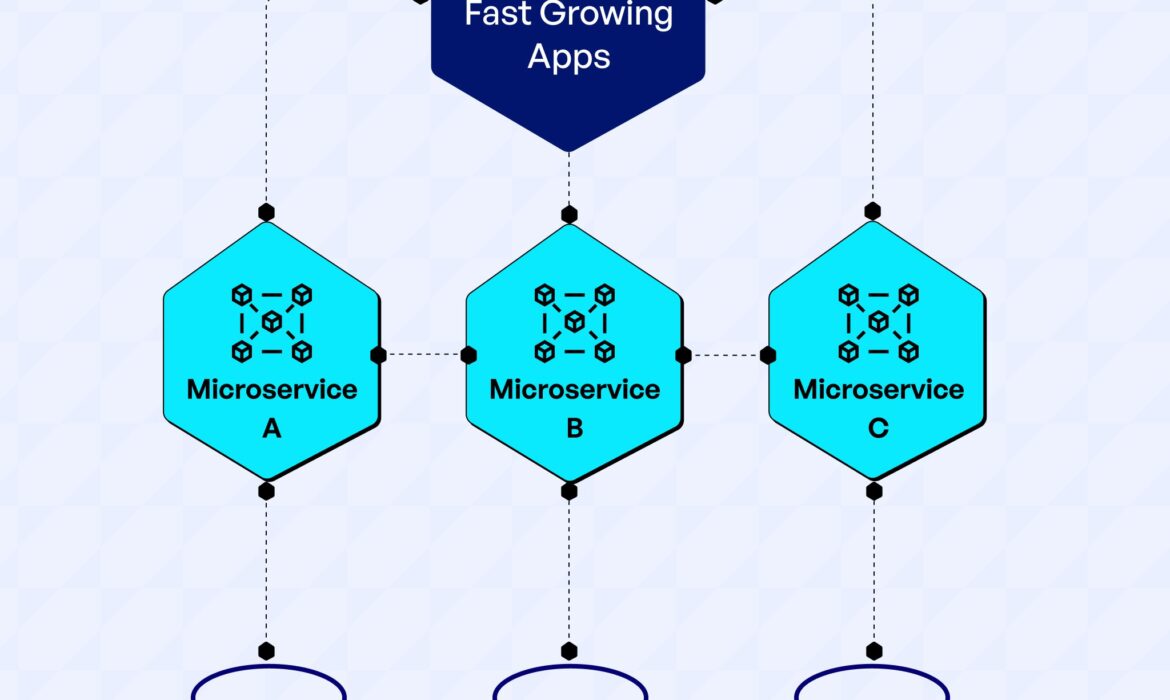
A microservices architecture breaks your application into multiple, smaller services. Each service is responsible for a single business function, like authentication, payments, or notifications, and communicates through APIs.
The result? Autonomy, flexibility, and scalability.
Key Benefits of Microservices Architecture:
In short: monoliths move together; microservices move fast.
Modern cloud-native development has made microservices almost the default choice for growing businesses. With containers (Docker), Kubernetes, and serverless functions, managing distributed systems is easier and more cost-effective than ever.
Emerging Microservices Adoption Trends:
The ecosystem is mature. The tools are ready. Now it’s about architecting for speed and resilience.
| Criteria | Monolithic Architecture | Microservices Architecture |
|---|---|---|
| Scalability | The entire app must scale together | Scale services independently |
| Deployment | Single pipeline for all updates | Continuous deployment per service |
| Performance | Slows down with growth | Optimised per function |
| Fault Isolation | One failure affects all modules | Failures are isolated to specific services |
| Technology Flexibility | One stack for all modules | Different stacks per service |
| Maintenance | Complex and time-consuming | Modular and manageable |
Transitioning from monolith to microservices isn’t an overnight change; it’s a process that requires planning, patience, and precision.
1. Identify Clear Boundaries
Start by separating the app into logical domains: user management, billing, search, etc. Define APIs that will allow these components to communicate.
2. Start Small, Scale Gradually
Pick one function to extract as a microservice, maybe your authentication module, and deploy it independently. Learn and iterate from there.
3. Use an API Gateway
Centralise routing, authentication, and monitoring across all services for better visibility and control.
4. Prioritise Observability
Use distributed tracing tools like Jaeger or OpenTelemetry to track requests across multiple services.
5. Automate Everything
Implement CI/CD pipelines for each service. Use Docker for containerisation and Kubernetes for orchestration.
6. Keep Communication Lightweight
Use REST or gRPC for service-to-service communication. Avoid tight coupling at all costs.
Breaking the monolith isn’t just about speed; it’s about resilience, independence, and freedom to evolve.
At HK Infosoft, we help startups and enterprises migrate from monolithic systems to scalable, cloud-native microservice architectures.
Our engineering teams specialise in:
We’ve helped logistics platforms, fintech products, and SaaS companies unlock faster releases and better scalability with tailored microservices blueprints.
By 2025, nearly every growing app is running microservices in some form. From modular APIs to serverless functions, the trend is clear: distributed systems are here to stay.
The future of development isn’t about building bigger; it’s about building smarter.
Microservices aren’t just the architecture of choice; they’re the engine of digital scalability.
The best time to break your monolith was yesterday. The second best is today.