


Nearly a decade ago, apps were predictable. Users tapped a button, the app responded, and the experience stayed inside neat UI screens. But in 2025, users expect something far more intuitive, apps that think, adapt, anticipate, and act on their behalf.
That shift is powered by AI agents.
AI agents are no longer experimental toys. They are now becoming the backbone of modern digital products across industries like logistics, finance, healthcare, hospitality, retail, and SaaS. According to the Gartner Emerging Tech Report 2025, more than 62 percent of enterprise applications will include autonomous or semi-autonomous AI agents by 2026.
But here’s the real question for business leaders:
How can you integrate AI agents into your web or mobile app without breaking your product, budget, or timelines?
And for IT teams:
How do you build AI agents that are reliable, secure, predictable, and scalable – not just clever chatbots stitched into an interface?
This comprehensive guide explores exactly that. It explains how HK Infosoft builds AI agents for custom web and mobile apps, using technologies like React JS, Laravel, Node.js, Flask, React Native, Flutter, AWS, Google Cloud, and modern vector stores.
If you are an SME or enterprise in the USA, Canada, Europe, or Australia looking for cost-effective, high-performance solutions from an experienced Indian IT partner – this guide is for you.
Let’s break it down.
The Old Model: Manual UI. The New Model: Autonomous Behavior.
Traditional apps depend heavily on buttons, screens, and human-triggered workflows.
AI agents change that dynamic.
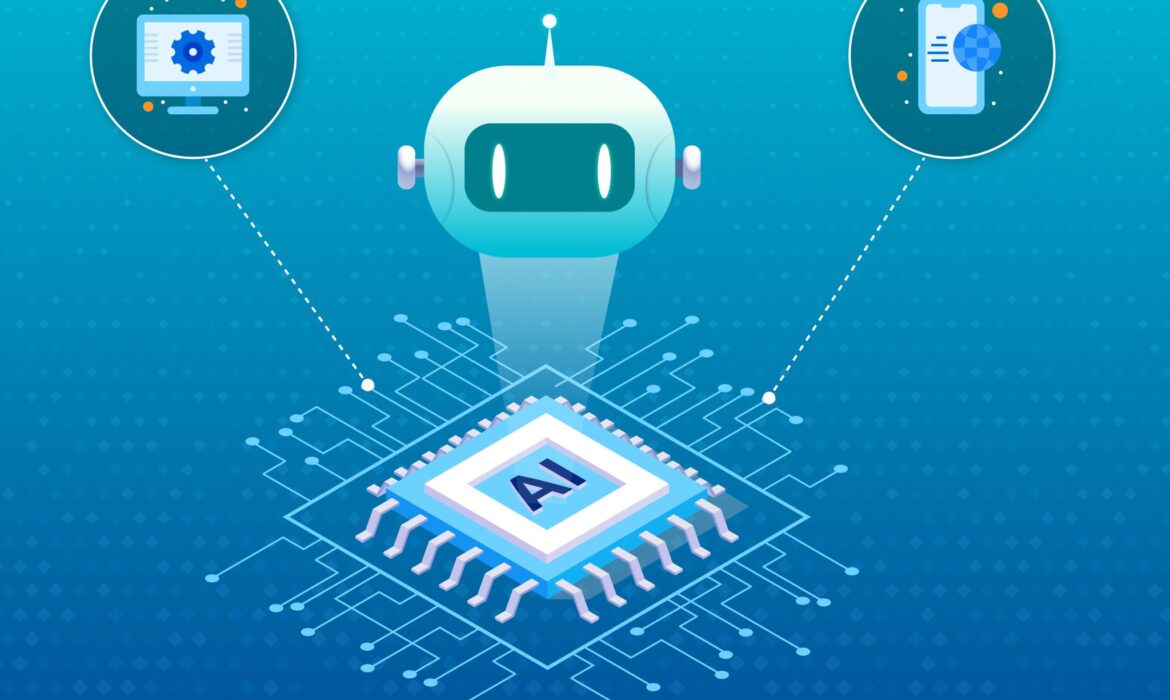
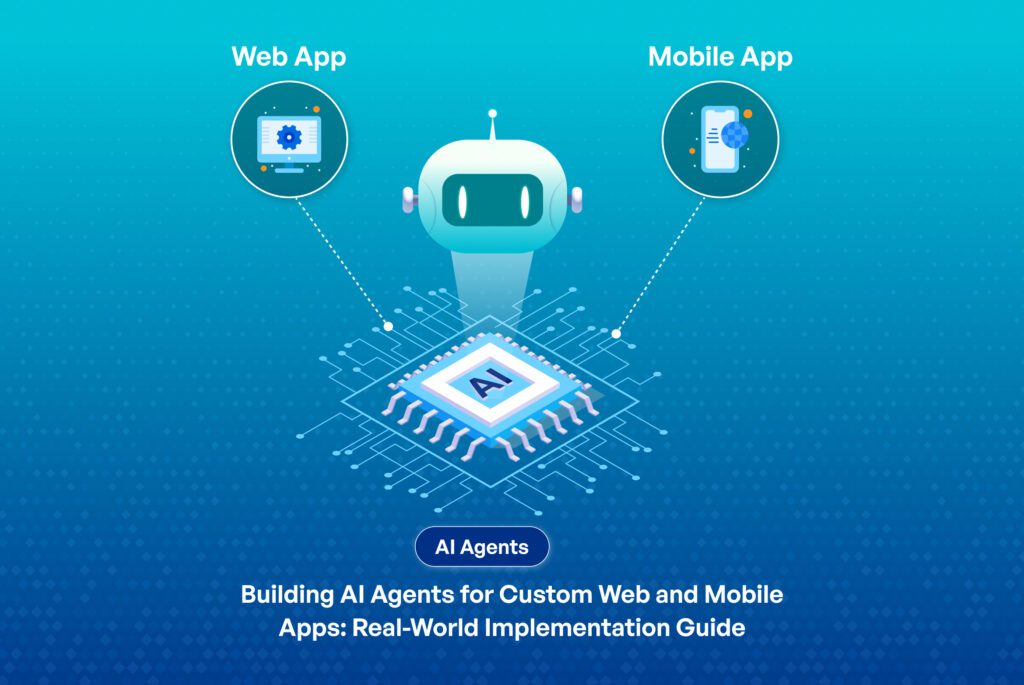
An AI agent is a system that can observe, reason, plan, and take actions automatically inside your app.
Think of it as an intelligent teammate running inside your software.
Examples of AI agents in modern apps
Why the world is moving to agent-driven apps
According to McKinsey 2025, AI-driven automation can reduce operational costs by up to 45 percent in digital workflows.
More benefits include:
In other words: AI agents help your app work smarter, not harder.
AI agents don’t replace your existing app. They plug into it.
HK Infosoft builds agents that integrate seamlessly into:
To develop stable and scalable agents, we use a combination of technologies:
1. LLM models (OpenAI, Anthropic, Llama, Mistral)
2. Vector storage (Pinecone, Qdrant, Weaviate)
3. Workflow engines (Temporal, n8n, LangGraph, custom Node.js executors)
4. Memory systems (short-term, long-term, episodic memory)
5. Tooling & API integration (CRM, ERP, 3rd-party data sources)
6. Cloud deployment (AWS Lambda, Docker, Kubernetes, Firebase)
Where AI agents live inside your app
For mobile apps, HK Infosoft integrates agents directly into React Native and Flutter screens, offering:
For web apps, agents operate silently in the backend, supporting workflows like:
Logistics & Delivery Apps
We built an AI-driven route optimization engine for a logistics client that reduced delivery time by 26 percent using agents that:
Hospitality & Resort Apps
Our AI concierge for a hospitality client handles:
Fintech & Accounting Platforms
AI agents categorize transactions with 94 percent accuracy, and conduct:
Healthcare Apps
AI agents assist in:
SaaS & B2B Apps
Agents perform:
These solutions are built using the same tech stack HK Infosoft uses for enterprise-grade apps – React JS, Node.js, Laravel, Next.js, React Native, and cloud-native components.
Step 1: Define the agent’s mission
We collaborate with clients to answer:
Step 2: Identify the data sources
Agents need context. We analyze:
Step 3: Select the right AI model
Based on complexity:
Step 4: Build the agent workflow
We map out:
Step 5: Integrate agent tools
Tools give agents power. Examples:
Step 6: Deploy with cloud scaling
Using:
Step 7: Continuous monitoring
We track:
This ensures agents remain reliable and predictable.
One of HK Infosoft’s eCommerce clients faced huge inefficiencies:
We implemented an AI operations agent built with:
Results
Why it worked
The agent handled:
All tasks were automated inside a single agent-driven pipeline.
Here is a simplified architecture HK Infosoft uses for enterprise-grade agents:
Frontend
Backend
AI Layer
Memory & Context
Workflow & Orchestration
Cloud
DevOps
This modular architecture ensures agents remain fast, reliable, and scalable.
Agents will become multimodal
Not just text. They will:
Agents will become collaborative
Multiple agents will work together like internal departments.
Apps will become agent-first
UX will shift from tapping to task delegation.
Enterprises will adopt autonomous workflows
According to IDC 2025, 40 percent of enterprise workflows will be fully autonomous by 2027.
SMEs will adopt agents faster than expected
Why? Cost savings.
In short, AI agents will become as normal as APIs.
AI agents are no longer optional. They are becoming the competitive edge that separates fast-moving businesses from those stuck in manual operations.
With HK Infosoft’s deep expertise in React JS, Next.js, Node.js, Laravel, React Native, Flutter, AWS, and Google Cloud, we help global clients build agent-driven apps that are fast, scalable, and future-ready.
If you want your app to think, act, and deliver like a modern intelligent system – now is the time to build.
Ready to get started? Choose your next step:
1. Book a free consultation
2. Hire dedicated AI developers