For many years, cybersecurity worked like a fire brigade. A company would set up defenses, wait for something to go wrong, and then rush to detect the attack, contain the damage, and recover. This “detect and respond” approach protected businesses for a long time, but today it is no longer enough.
Attackers now use automation and AI to find weak points in minutes, and a single breach can lead to stolen customer data, frozen systems, legal trouble, and lost trust. That is why a new approach is gaining attention: preemptive cybersecurity. Gartner lists it among its top strategic technology trends, and for good reason. In this article, we explain what preemptive cybersecurity is, how it works, and how your business can start using it.
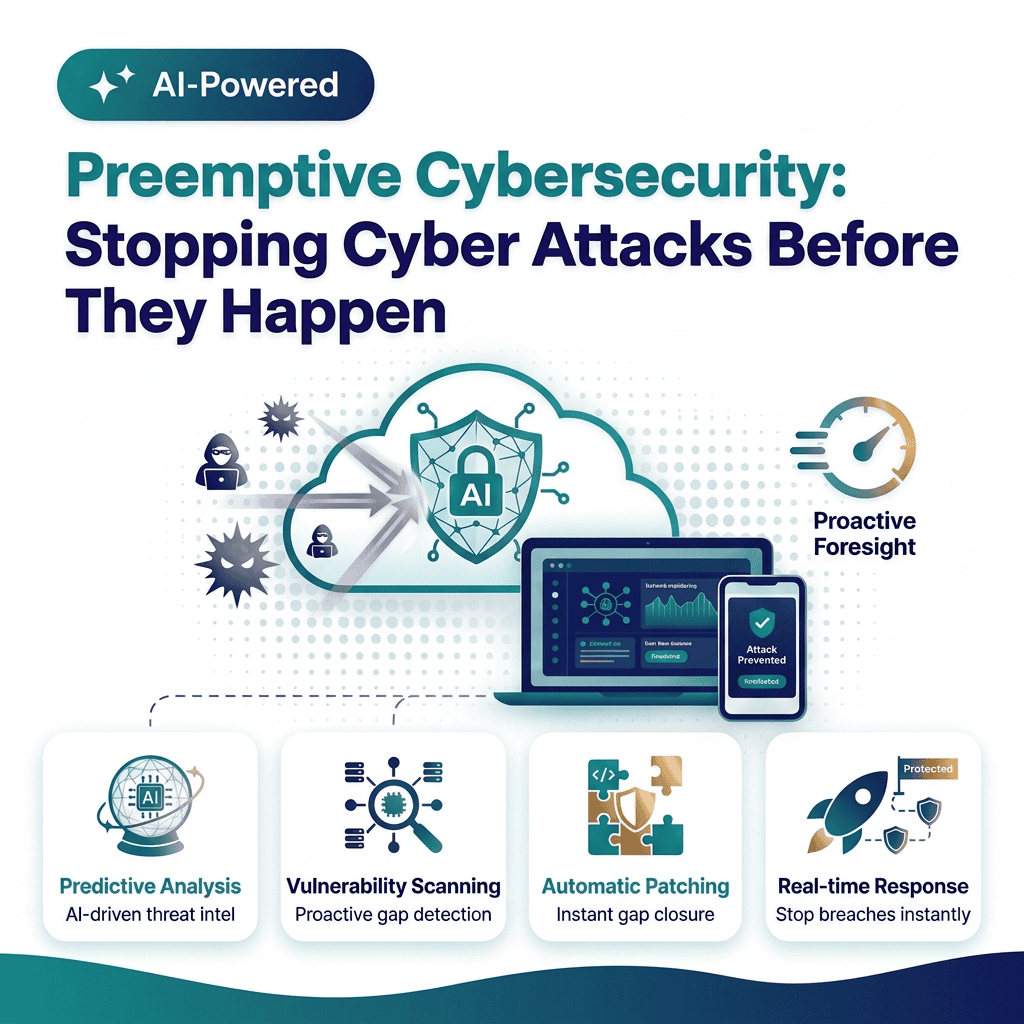
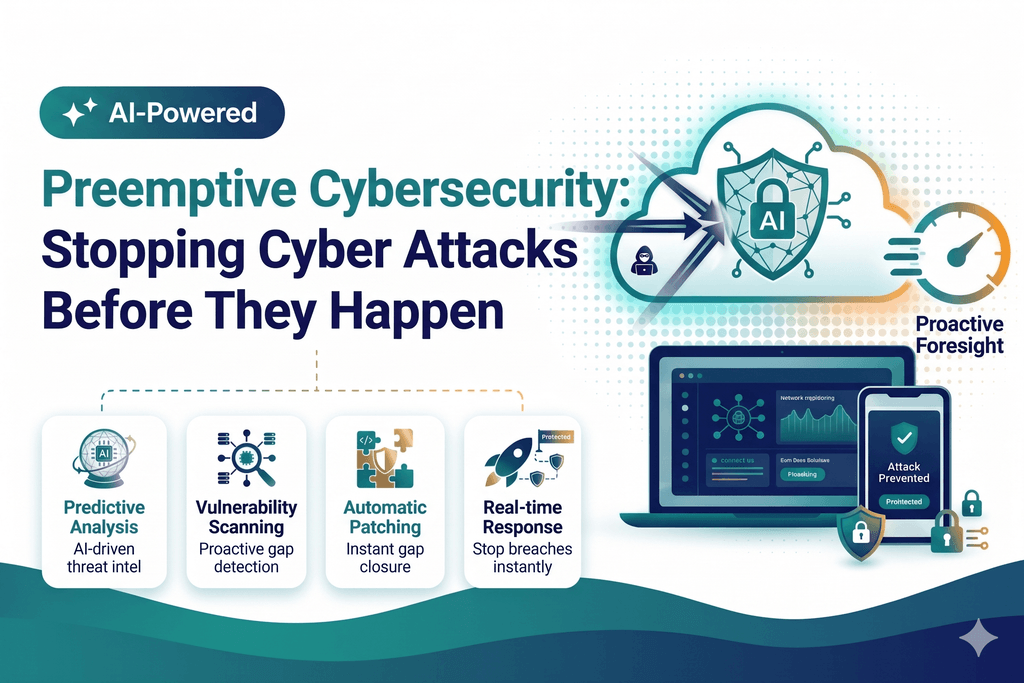
Preemptive cybersecurity means identifying and stopping threats before they can harm your business. Instead of waiting for an alarm to ring, it focuses on predicting where attackers are likely to strike, closing those gaps in advance, and blocking suspicious activity early.
A simple comparison helps. Traditional security is like installing a CCTV camera and calling the police after a theft. Preemptive security is like noticing that a window lock is weak, fixing it, and spotting a suspicious person near your building before they even try to enter.
In practice, this approach combines three ideas:
There are several reasons why waiting to react has become risky.
In short, if your defense starts only after the attack, you are always one step behind.
Preemptive security is not a single product. It is a set of practices and tools that work together. Here are the main building blocks.
Security teams collect information about new attack methods, malicious websites, and software flaws being used by criminals worldwide. This knowledge helps them prepare defenses for threats that are likely to reach your business soon.
Every application, server, and device can have weaknesses. Preemptive security continuously scans your systems, ranks the problems by risk, and fixes the most dangerous ones first, rather than waiting for the yearly security check.
AI studies normal behavior in your systems, such as when employees log in, where data usually travels, and which devices connect. When something looks unusual, for example a login from a strange location at midnight, it can flag or block it immediately.
The “attack surface” is the total number of points an attacker could target. Preemptive security shrinks it by closing unused ports, removing old accounts, retiring outdated software, and limiting who can access what.
Some systems set up decoys, such as fake servers or files, that look attractive to attackers. When someone touches them, the security team gets an instant alert and can learn how the attacker operates, without any risk to real data.
When a threat is confirmed, the system can act in seconds: isolate an infected device, lock a compromised account, or block a harmful connection. Speed makes a huge difference in limiting damage.
Phishing and social engineering. Fake emails and messages that trick employees into sharing passwords or clicking harmful links. Early detection and employee awareness greatly reduce the risk.
Ransomware. Malware that locks your files and demands payment. Strong backups, patched systems, and early detection can stop it before it spreads.
Unpatched software. Many attacks succeed simply because a known flaw was never fixed. Automated vulnerability management closes this gap.
Stolen credentials. Weak or reused passwords are a favorite entry point. Monitoring and multi-factor authentication make stolen passwords far less useful.
Insider mistakes and misuse. Not every threat comes from outside. Access controls and behavior monitoring help catch accidental errors or suspicious internal activity.
You do not need a large security team or a huge budget to begin. Here is a step-by-step approach.
The best time to think about security is before your software is built, not after it is launched. When websites, apps, and business systems are designed with security in mind from day one, with secure coding, regular testing, and careful access control, many problems never appear in the first place.
If you already have systems running, a security review can reveal hidden risks and give you a clear, prioritized plan to fix them.
If you decide to work with an IT company, ask a few simple questions:
A good partner will focus on prevention, explain risks honestly, and tailor protection to your size and budget.
As attackers adopt AI, defenders must do the same. In the coming years, security will become more automated, more predictive, and more closely built into every part of business technology. Companies that move from reaction to prevention now will be better prepared for whatever new threats appear.
Preemptive security is not about being perfect or having zero risk. It is about making your business a harder, less attractive target, and being ready to act before small problems turn into big ones.
Cyber attacks are faster, smarter, and more frequent than ever, and waiting to react is a costly gamble. Preemptive cybersecurity gives your business a better path: predict threats, fix weak points early, and stop attacks before they cause harm. Start with the basics, build good habits across your team, and add smarter tools as you grow.
Want to know how secure your business really is? Contact our team today for a security consultation, and let us help you protect your systems, your data, and your customers’ trust.